
It shows up on drawings and site schedules because it helps crews build safer, straighter formwork with fewer surprises than many solid-sawn alternatives.
What exactly is formwork LVL?
Formwork LVL is an engineered wood product made by bonding thin wood veneers with adhesive into a billet, then cutting it into beams, joists, or rails. Because the veneers are layered and controlled in manufacturing, the finished member is more uniform than typical sawn timber.
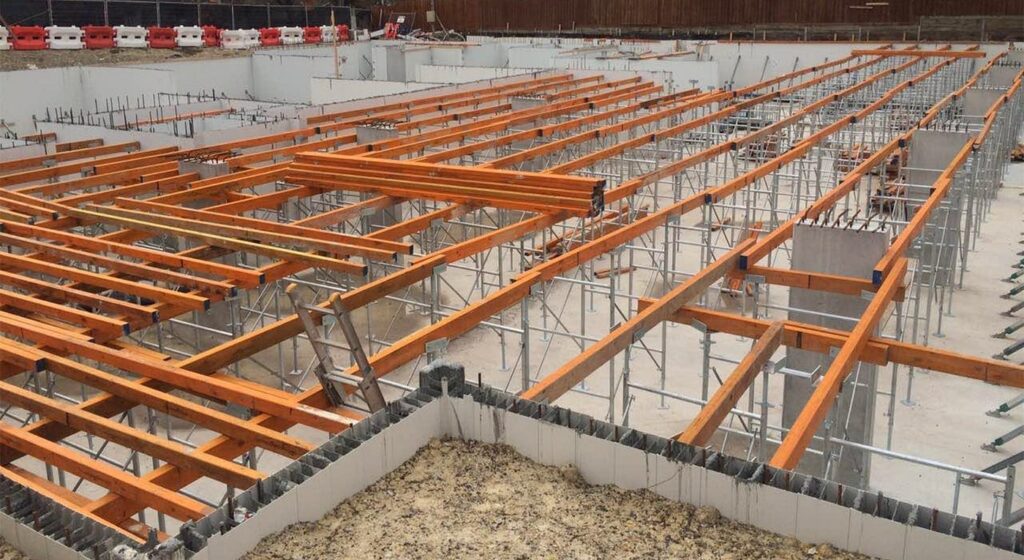
On site, they use it for bearers, joists, walers, strongbacks, and edge form components, depending on the forming system.
Why do engineers trust LVL for temporary structural support?
Engineers trust LVL because its structural properties are more consistent from piece to piece—often more predictable than traditional concrete plywood used in formwork applications. That consistency reduces the likelihood that one weak member governs the whole formwork bay.
It also makes calculations easier to defend. When the product grade and manufacturer data are clear, designers can specify a capacity with fewer assumptions about knots, slope of grain, or hidden defects—factors that can vary more significantly in standard concrete plywood sheets.
How does LVL improve strength-to-weight and handling?
LVL typically delivers high bending strength and stiffness relative to its weight, which matters when crews are carrying members, placing them at height, or adjusting layouts quickly. Lighter, straighter components can mean less on-the-fly propping and fewer makeshift fixes.
From an engineering perspective, better stiffness often means better deflection control, which helps keep the form face flatter and the concrete finish more consistent.
Why is dimensional stability such a big deal in formwork?
Dimensional stability affects line, level, and the final concrete geometry. LVL is manufactured to tighter tolerances and tends to be straighter, which helps crews keep soffits and edges true across repeated bays.
Less twist and bow can also mean fewer local stress concentrations. In formwork, those small geometry issues can become real load path problems once wet concrete and construction live loads are added.
What role does predictability play in design and safety?
Predictability is the main reason LVL appears in formwork specifications. Engineers are trying to control risk in a temporary structure that often carries high loads for a short time, sometimes with limited redundancy.
When member properties are repeatable, they can design shoring and forming layouts with clearer safety margins. That supports safer inspections, clearer sign-off, and fewer disputes when something looks “close enough” but is not.
How does LVL perform under wet concrete loads and short-term loading?
Formwork design is driven by fluid concrete pressure, impact during placement, vibration, and temporary construction loads. LVL’s consistent stiffness helps limit deflection during pouring, which can reduce leakage at joints and help keep slab thickness within tolerance.
They still need to account for duration of load and moisture exposure, because wood products can lose stiffness when wet or under sustained loading. The point is not that LVL ignores these effects, but that its baseline behavior is easier to model and manage.
What makes LVL useful for repetitive pours and reuse?
Formwork is often used in cycles, so reuse matters. LVL’s uniformity can help it survive repeated handling with less cumulative distortion, especially when edges are protected and bearing points are detailed properly.
Engineers and contractors also like repeatability. If the same LVL members are used across multiple bays, performance tends to stay consistent, which supports faster production and fewer corrective works.
How does LVL compare to solid-sawn timber in real projects?
Compared with solid-sawn timber, LVL is usually more consistent, straighter, and easier to specify against published design values. Solid timber can work well, but variability can force more conservative spacing or more frequent on-site rejection.
The trade-off is that LVL can be more sensitive to poor detailing at bearings or notches, and it should not be treated as “indestructible.” Engineers specify it because it behaves predictably when crews follow the installation rules.
What installation details do engineers care about most?
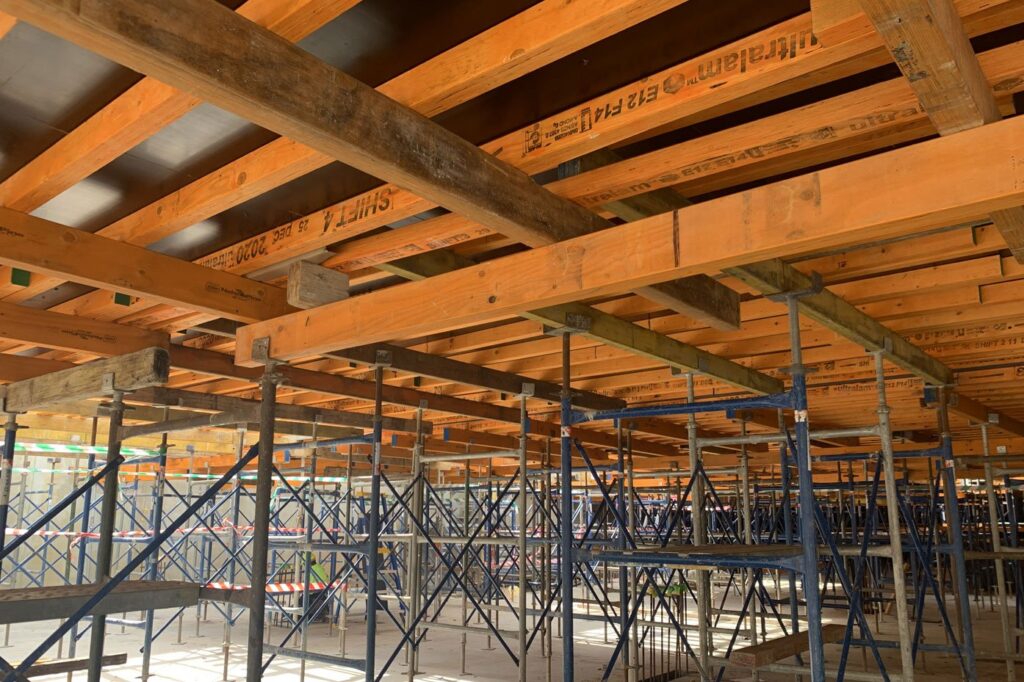
Engineers care most about bearing length, lateral restraint, fastener type, and keeping members dry where possible. Many formwork issues come from crushing at supports, missing blocking, or unbraced compression edges rather than from the LVL itself.
They also pay close attention to notching and holes. If crews cut LVL without approval, capacity can drop quickly, so field modifications should be controlled and documented.
What common mistakes reduce LVL capacity on site?
The most common mistakes are inadequate bearing, over-spanning, removing props too early, and letting members sit in water or mud for long periods. Another frequent issue is using damaged members because they “look mostly fine,” even when edges are crushed or delaminated.
Engineers specify LVL for reliability, but they rely on proper storage, handling, and inspection to keep that reliability intact.
When should they choose LVL, and when might they not?
They should choose formwork LVL when spans are demanding, deflection control matters, and consistent performance is needed across repeated pours. It is also a strong choice when the formwork design must be clearly supported by manufacturer data for approvals and inspections.
They might not choose it when exposure conditions are uncontrolled, when extensive field cutting is unavoidable, or when a proprietary steel/aluminium system provides better durability and faster cycling for the same project constraints.
What is the practical takeaway for engineers and contractors?
Engineers specify formwork LVL because it offers consistent structural properties, good stiffness, and predictable behavior that supports safer formwork design. Contractors benefit when that predictability turns into faster setups, cleaner concrete lines, and fewer mid-pour corrections.
Used with the right spacing, bracing, and moisture management, formwork LVL is one of the simplest ways to reduce uncertainty in temporary structural support.
FAQs (Frequently Asked Questions)
What is formwork LVL and how is it manufactured?
Formwork LVL is an engineered wood product made by bonding thin wood veneers with adhesive into a billet, then cutting it into beams, joists, or rails. This manufacturing process creates a more uniform and consistent member compared to typical sawn timber, making it ideal for temporary structural support in concrete forming.
Why do engineers prefer using formwork LVL for temporary structural support in concrete forming?
Engineers trust formwork LVL because of its consistent structural properties from piece to piece. This uniformity reduces the risk of weak members governing the entire formwork bay, simplifies design calculations with clear manufacturer data, and enhances safety by providing predictable load capacity when installed correctly.
How does formwork LVL improve strength-to-weight ratio and handling on construction sites?
Formwork LVL delivers high bending strength and stiffness relative to its weight, which facilitates easier handling by crews during carrying, placement at height, and quick layout adjustments. Its lighter and straighter components reduce the need for on-the-fly propping and makeshift fixes, while better stiffness helps control deflection for flatter form faces and more consistent concrete finishes. See also to learn more about LVL formwork vs traditional timber formwork compared.
What is the importance of dimensional stability in formwork LVL for concrete forming?
Dimensional stability in formwork LVL ensures that line, level, and final concrete geometry are maintained accurately. Manufactured to tighter tolerances with less twist and bow than solid-sawn timber, LVL helps keep soffits and edges true across repeated bays, minimizing local stress concentrations that can lead to load path problems under wet concrete pressure and construction live loads.
How does predictability of formwork LVL contribute to safer design and construction practices?
Predictability is key in formwork LVL’s appeal; consistent member properties allow engineers to design shoring and forming layouts with clearer safety margins. This leads to safer inspections, straightforward approvals, and fewer disputes on site by reducing uncertainty in temporary structures that carry high loads for short durations with limited redundancy.
What are common installation considerations and mistakes to avoid when using formwork LVL?
Proper installation details such as adequate bearing length, lateral restraint, appropriate fastener types, and moisture management are critical. Common mistakes include inadequate bearing support, over-spanning members, premature removal of props, exposure to water or mud, unauthorized cutting or notching which reduces capacity, and using damaged or crushed members. Following manufacturer guidelines preserves the reliability of formwork LVL.